The Thief Within: Unmasking Our Inner Illusions
The Whispers of a Deceptive Dawn
Jung, that profound cartographer of the soul, once noted how certain perspectives could unlock an entirely different angle on the human psyche. He saw cosmic patterns reflected in our inner worlds, a grand tapestry woven with threads of archetype and destiny. While a full astrological chart might be a lifetime's study, the Fourth Tarot offers its own swift, potent reflections. Today, we turn our gaze to the Seven of Swords, a card that, when appearing in the realm of 'The Descent'—that liminal space where shadow meets light—speaks volumes about the subtle deceptions that obscure our inner landscape.
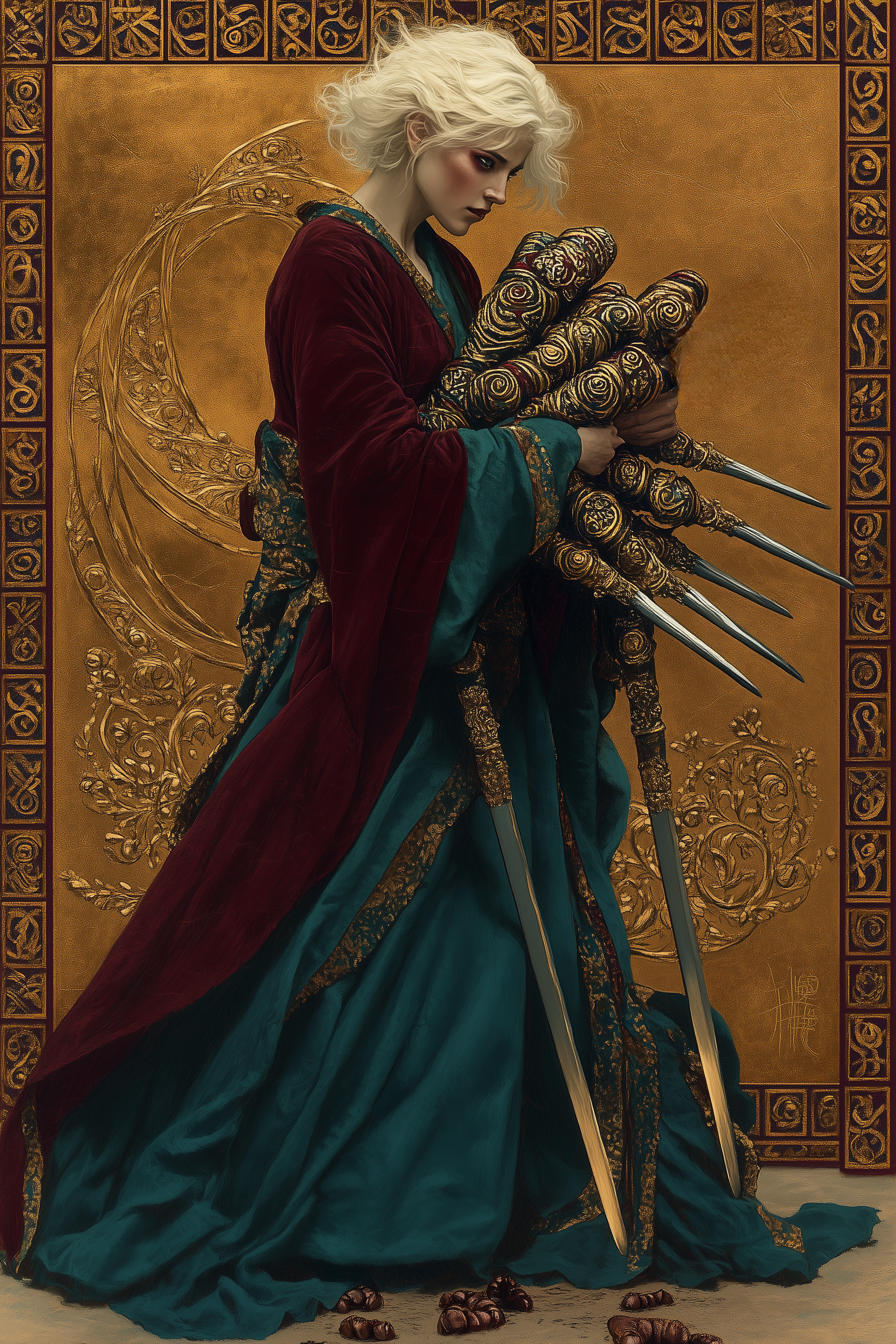
This card does not merely speak of external treachery, of masks worn by others. No, its deeper resonance lies in the insidious, internal theft of awareness, the Māyā of the self. We are invited to consider the cunning strategies we employ, not against a perceived foe, but against our own burgeoning truth. The image of the figure, stealthily making off with five swords while two remain, is a potent metaphor for this internal heist. What truths do we pilfer from our conscious awareness? What aspects of our authentic self do we leave behind, discarded in the haste of self-preservation?
The buffers We Build: Architects of Illusion
Within the framework of the Fourth Way, Gurdjieff spoke of buffers—those elaborate psychological defenses we construct to avoid confronting uncomfortable truths. These are the intricate internal mechanisms that allow us to maintain a comfortable, albeit often false, image of ourselves. They are the architects of our illusions, preventing us from seeing our own contradictions, the subtle ways we sabotage our growth, and the grand narratives we spin to avoid genuine self-inquiry.
The Seven of Swords, particularly in 'The Descent,' asks us to look closely at these buffers. Where do we choose cleverness over courage? Where do we opt for the familiar comfort of a self-spun tale rather than the bracing air of truth? These internal strategies become so refined, so ingrained, that we often operate within their confines without even realizing the extent of our own self-imposed blindness. We become the trickster not just to the outer world, but to our own evolving spirit.
Māyā and the Internal Thief of Awareness
The Sanskrit concept of Māyā (माया)—deception, trickery, illusion—resonates deeply with the essence of this card. It is the veil we pull over our own eyes, the mirage we construct to avoid the stark beauty of reality. This is the internal thief of awareness, diligently working to prevent true self-remembering. It convinces us that we are making progress, that we are on the right path, all while subtly diverting us from the genuine work of development. We might be busy, productive, even outwardly successful, yet internally, a vital part of our potential is being siphoned away.
Consider the trickster archetype, so central to Jungian thought. Here, it manifests not as an external force, but as our own cunning mind. It's the part of us that convinces us we are being strategic when, in fact, we are merely sidestepping vulnerability. It's the voice that rationalizes away intuition, that justifies inaction, that paints our shadows in the most flattering light. In essence, we are stealing from our own possible evolution, cheating ourselves out of a deeper connection to our higher centers, those wellsprings of authentic being.
Reclaiming the Discarded Swords
To apply the wisdom of the Seven of Swords meaningfully in our daily lives, we need not delve into complex charts or elaborate rituals. What is required is a moment, or perhaps many moments, of honest introspection. Where are we being clever rather than truly honest? What potential, what genuine growth, are we allowing Māyā to obscure? The two swords left behind in the card's imagery are crucial—they represent what is neglected, what is discarded, perhaps even what is deemed too difficult or too revealing to carry forward.
This card is a clarion call to awaken from the slumber of self-deception. It is an invitation to reclaim the swords—the tools, the insights, the authentic aspects of self—that we have allowed to be stolen or left behind. It asks us to dismantle the buffers, to pierce through the veil of Māyā, and to embrace the full, unvarnished truth of our internal landscape. The path to the higher centers, to genuine self-remembering, begins with an honest accounting of what we have been taking from ourselves. What will you choose to retrieve today?
Consider the quiet moments of your day. Where do you feel a subtle tug, a faint unease, a whisper of something unaddressed? That is often where the discarded swords lie, waiting to be reclaimed. The work is not about judgment, but about gentle, persistent awareness. It is about bringing light to the corners of the psyche where the internal thief has been operating in the shadows. Only then can the true journey of integration begin, and the full spectrum of your being emerge from the deceptive dawn.